
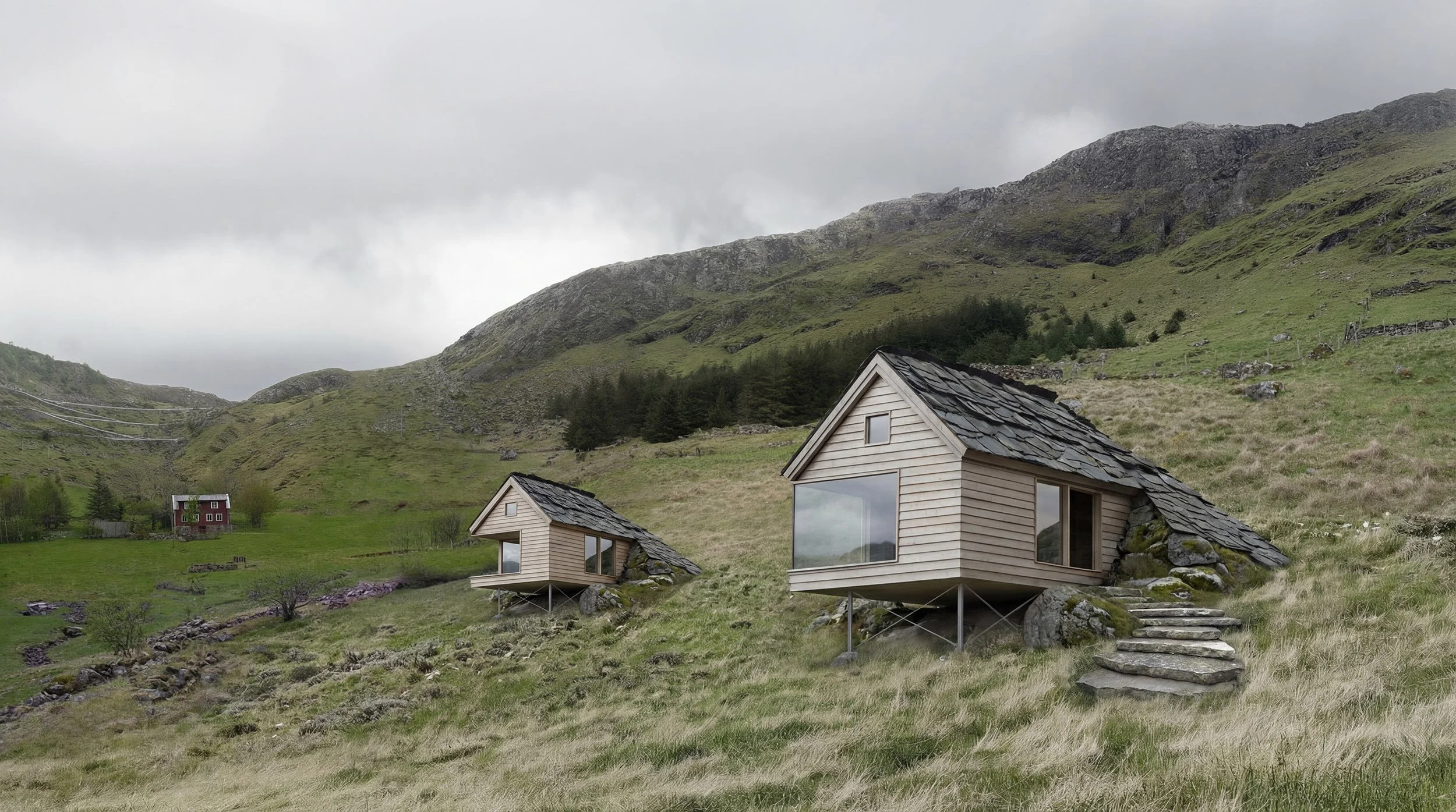
Sikker arkitektur og klimatilpasning
Et arkitektonisk rammeverk for bygging i områder med fare for steinsprang, jordskred og snøskred.

“I Norge fører klimaendringene til en intensivering av risikoen for bosetningene våre, i landskap som allerede er strengt begrenset av aktsomhetsområder og faresoner for skred. Tradisjonelle ingeniørløsninger baserer seg på kostbare og inngripende barrierer som etterlater dype sår i naturlandskapet. Dette tiltaket foreslår en ny vei: En arkitektur som ikke bare gjemmer seg for fjellet, men som integrerer sikkerheten direkte i det.”

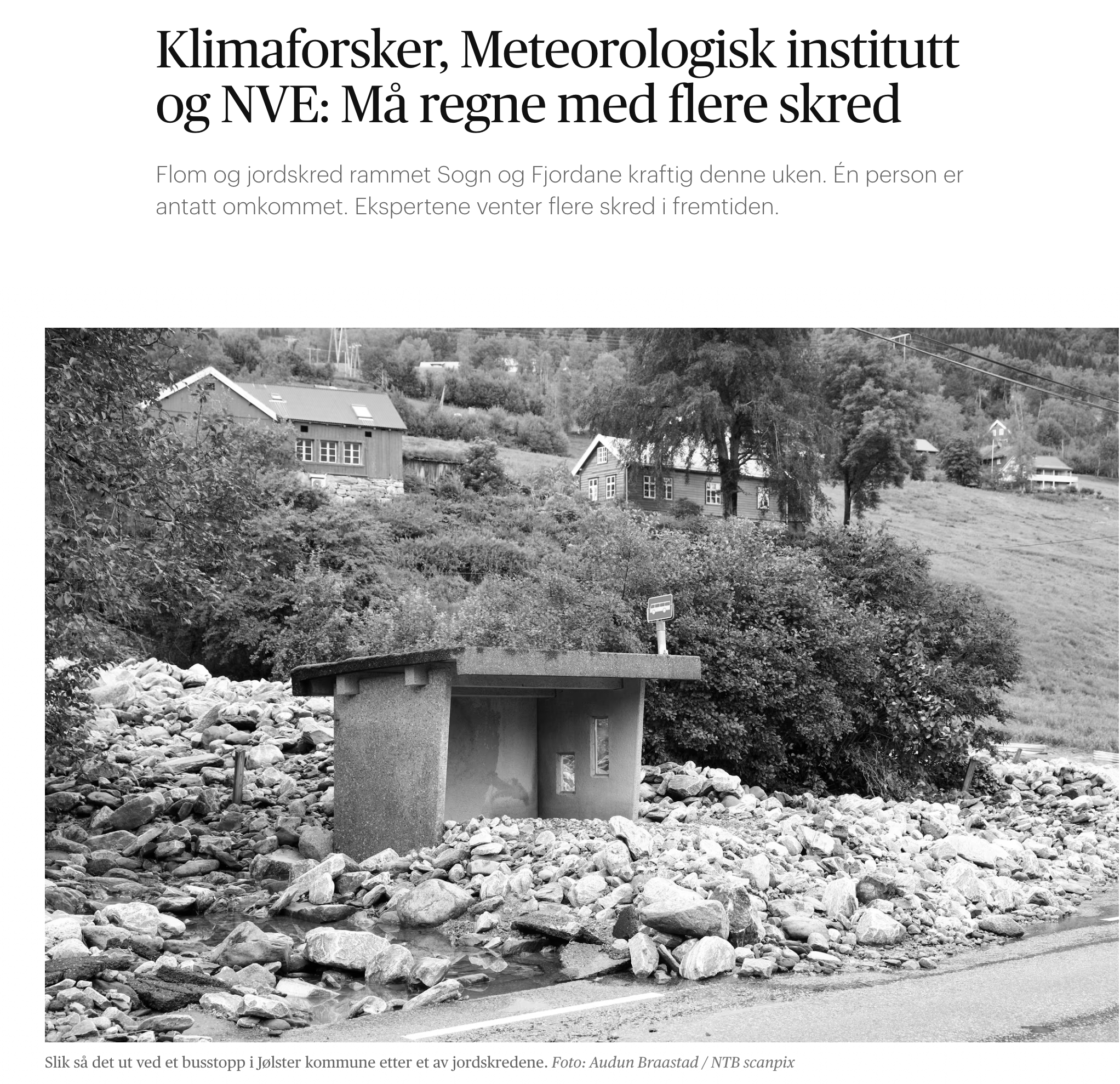
Strategisk relevans
På Vestlandet er «den nye normalen» preget av mer intens nedbør og økende skredfare. Klimaprognosene viser at disse farene vil fortsette å eskalere, noe som setter både eksisterende og ny bebyggelse under permanent press. Siden 2010 har forsikringsutbetalingene for skader forårsaket av skred passert 3463 millioner kroner¹, noe som utgjør en høy og gjentakende kostnad for både private eiere og fellesskapet.
Ved å integrere strukturell motstandsdyktighet i byggets tektonikk, har dette rammeverket som mål å navigere innenfor kravene i TEK17, samtidig som det norske landskapet bevares. Det søkes å frigjøre arealer med byggeforbud og sikre lokalsamfunn gjennom designledede løsninger, fremfor massiv og separat infrastruktur.
¹ Data basert på naturskadestatistikk (2010–2024) from Finans Norge: Natur- og værskader >
For kommuner og NVE
Arealbruk og områdesikring Åpne for utvikling av tomter i rød sone, og implementere strategier for sikring av eksisterende bebyggelse i faresoner.
Regulering og samsvar Et rammeverk som samsvarer med – og utfordrer – sikkerhetskravene i TEK17 for både ny og eksisterende bebyggelse.
For private utbyggere
Verdiskaping og arealutnyttelse Muliggjør utvikling i krevende terreng med arkitektur som sikrer langsiktig trygghet og øker tomtens verdi.
Estetisk resiliens Sikringstiltak som foredler eiendommens kvaliteter og arkitektoniske uttrykk, fremfor å skjule den bak tradisjonelle stålbarrierer.
For entreprenører
Innovasjonsledelse Ta en ledende posisjon i markedet med en ny bygningstypologi og spesialiserte utførelsesmetoder for krevende terreng.
Stedsspesifikke løsninger Gå fra standardiserte ingeniørløsninger til fornuftig, stedsspesifikk design som spiller på lag med terrenget fremfor å motarbeide det.
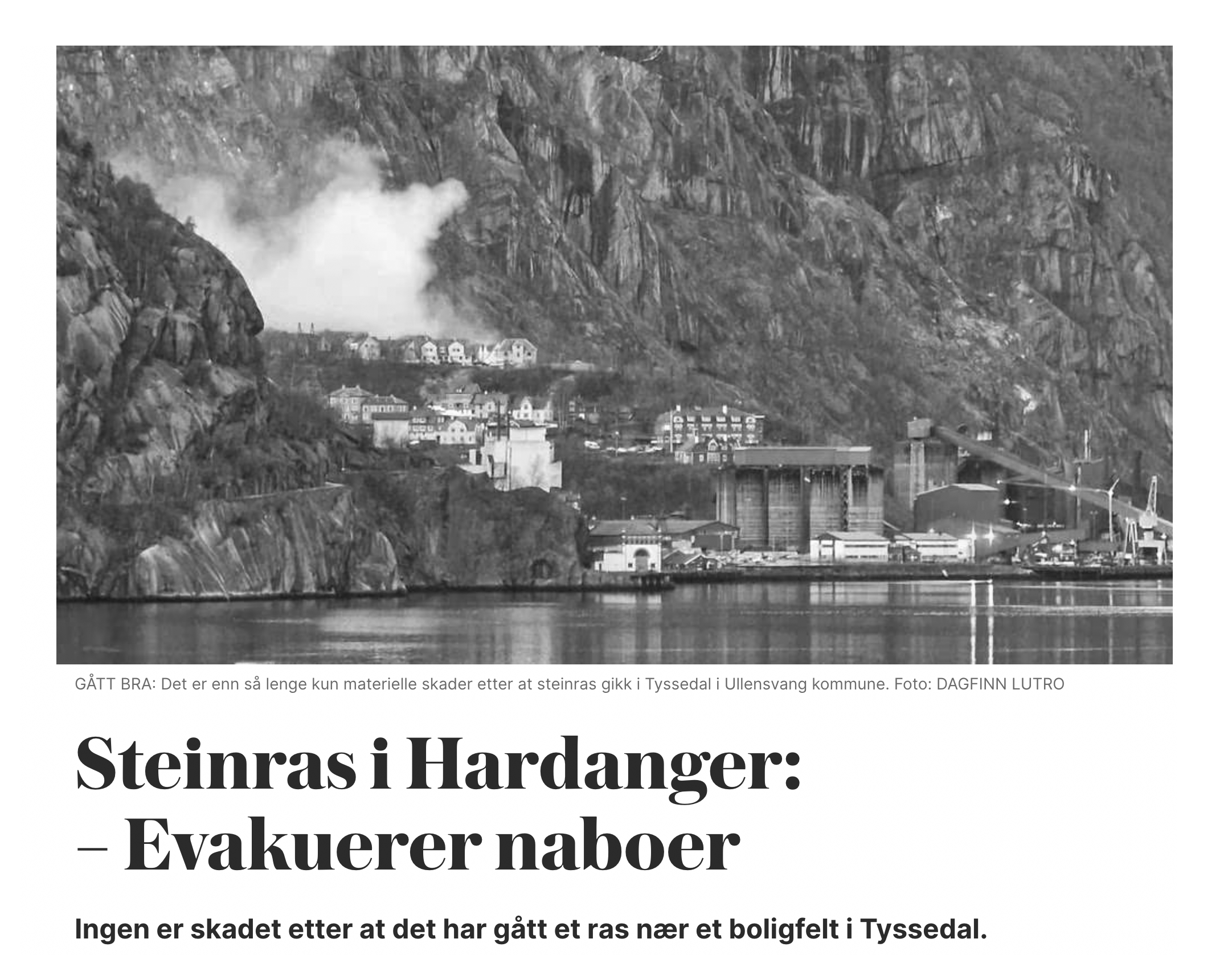
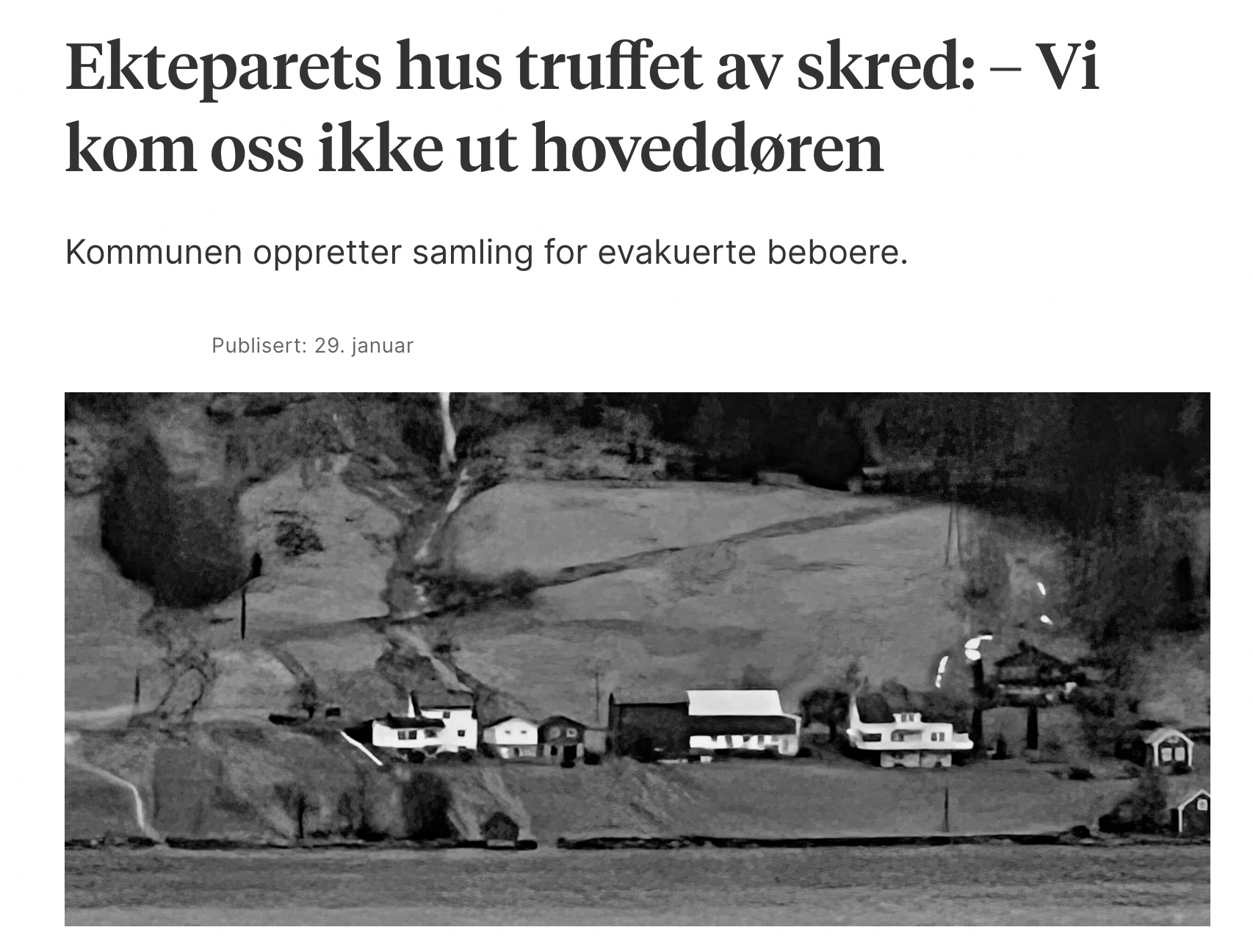
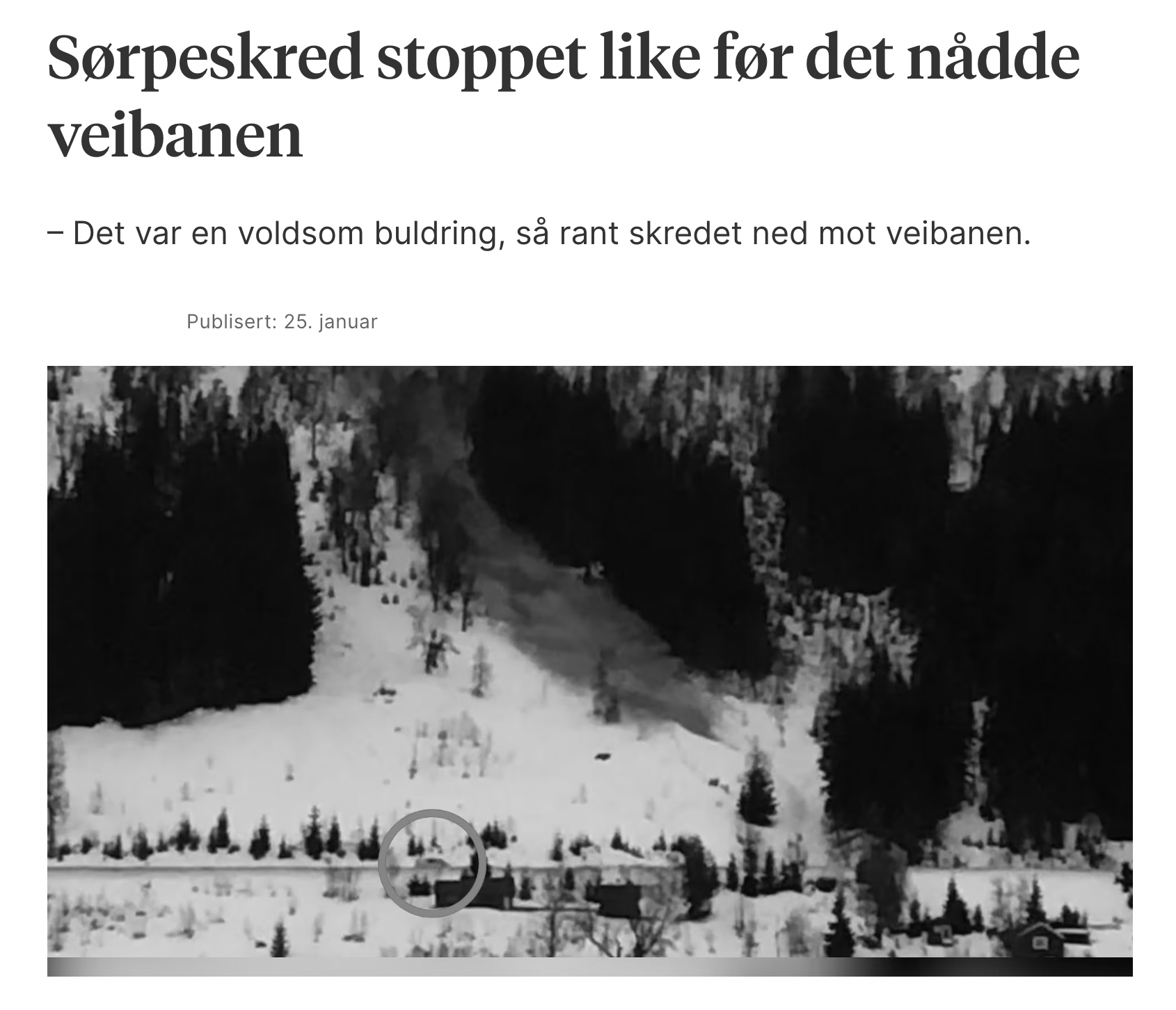
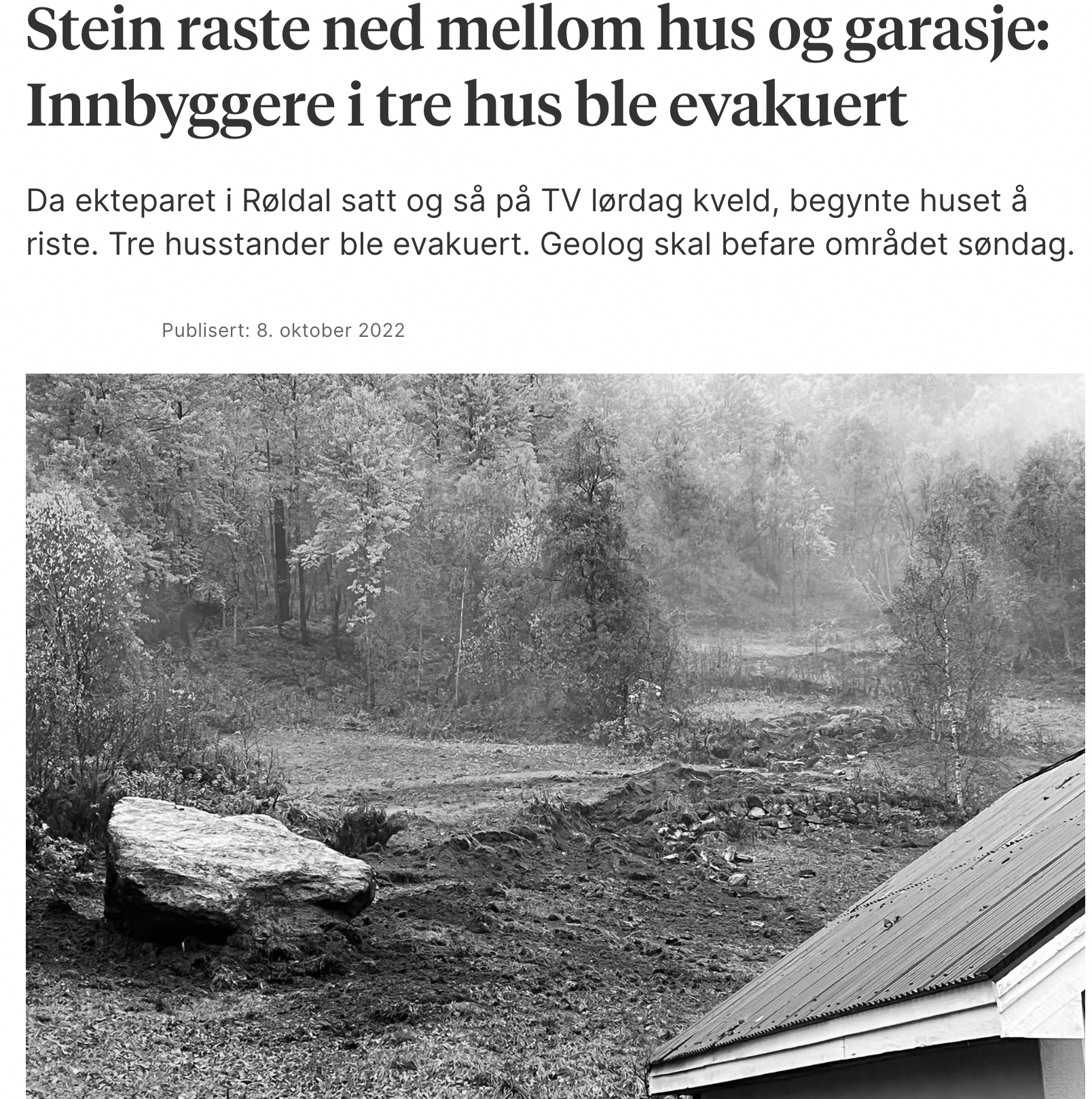
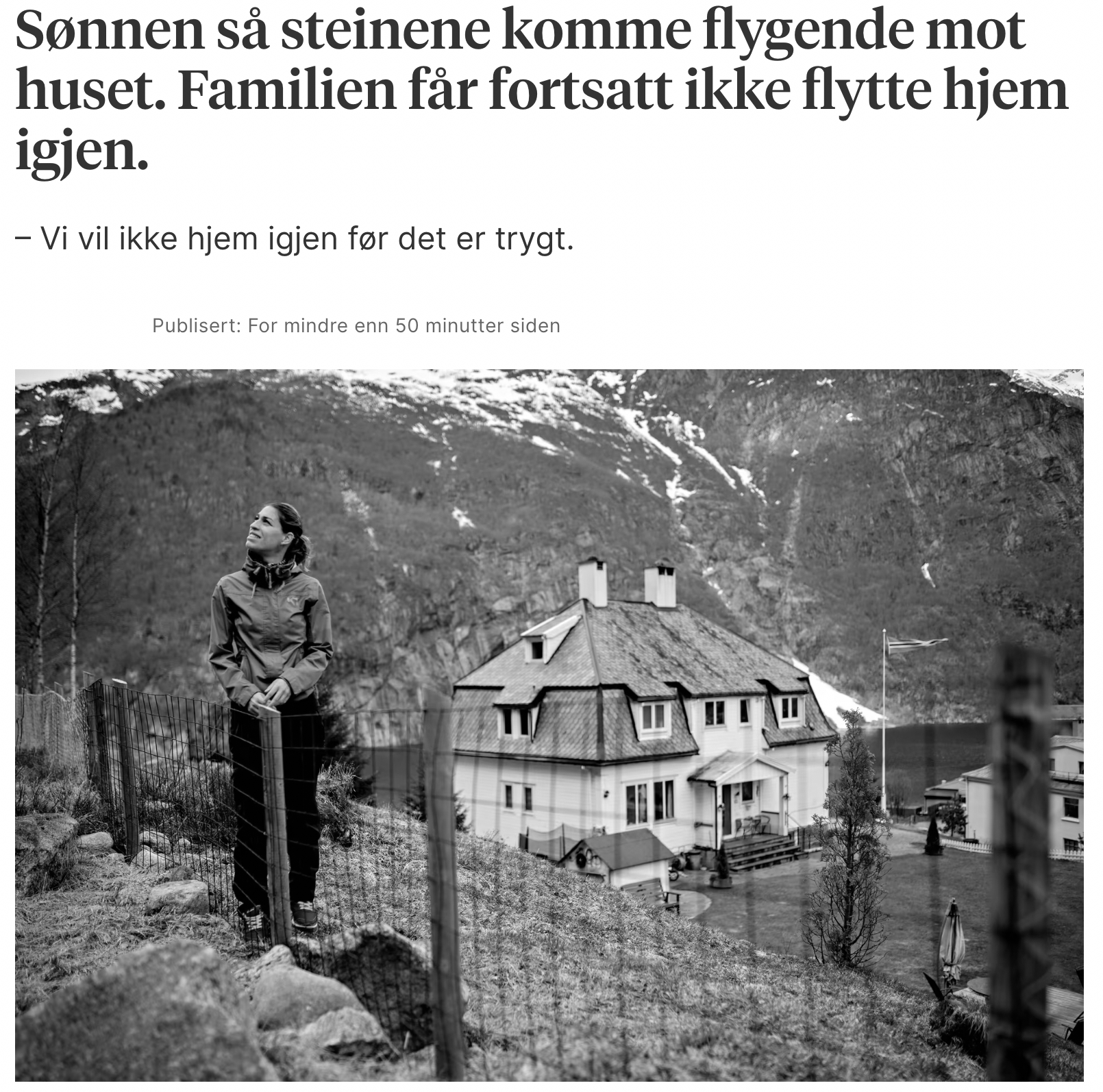
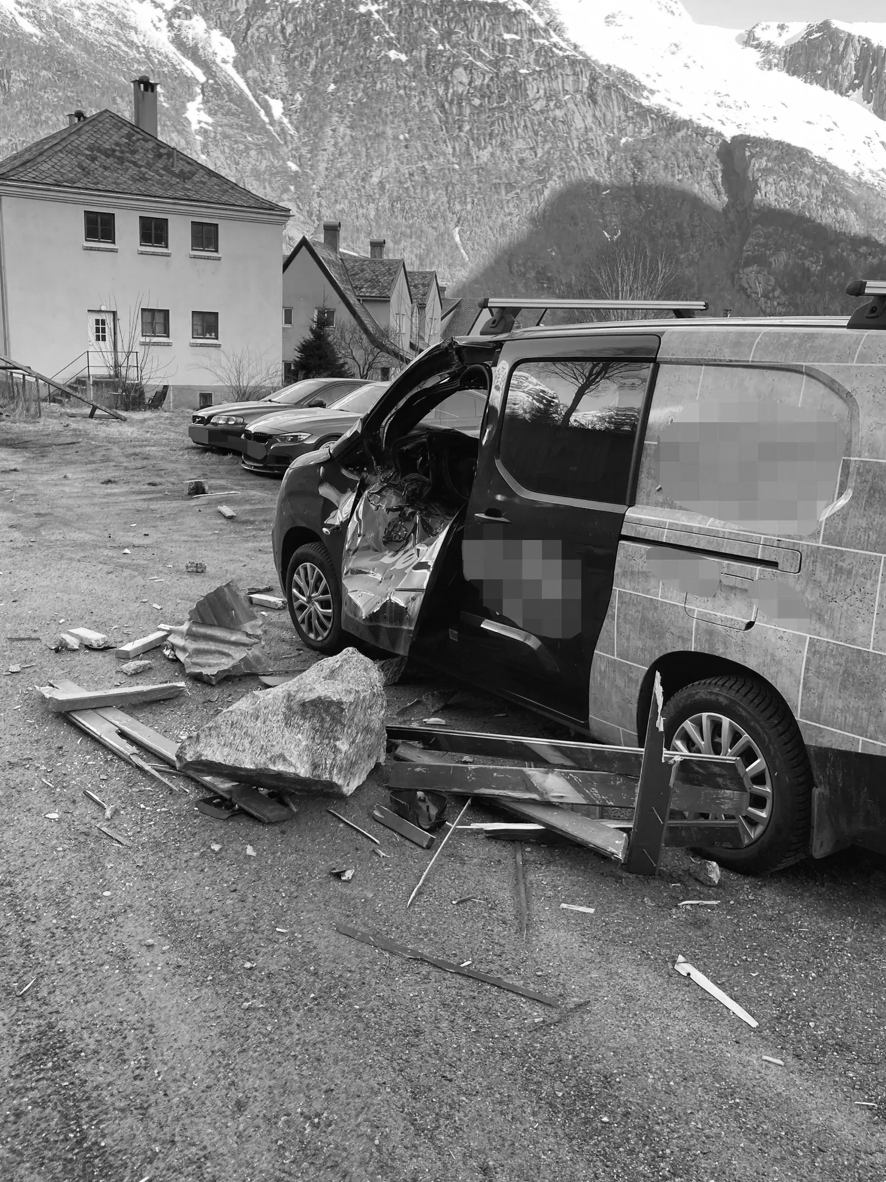
Geologisk risiko og klimaendringer
På Vestlandet har bratt terreng i kombinasjon med mer intens nedbør gjort skredhendelser til en vedvarende risiko. Selv om de nasjonale farekartene er helt nødvendige verktøy, fører de ofte til at langvarig og etablert bebyggelse havner i faresoner der videre utvikling og vedlikehold blir strengt regulert eller begrenset. Dette skaper et kritisk spenningsfelt mellom sikkerhetsforskrifter, kommunens formelle ansvar og den faktiske hverdagen til menneskene som bor i disse områdene.
Dette forskningsprosjektet adresserer denne konflikten ved å undersøke hvordan arkitekturen kan legge til rette for mer robuste og motstandsdyktige måter å leve med geologisk risiko på. Ved å skifte perspektiv kan vi begynne å betrakte disse naturkreftene ikke bare som trusler, men som designparametere som definerer et nytt og tryggere arkitektonisk språk – der bygget ikke lenger er en passiv observatør, men en aktiv deltaker i sin egen beskyttelse.
Ved å skifte perspektiv kan vi begynne å betrakte disse naturkreftene ikke bare som trusler, men som designparametere som definerer et nytt og tryggere arkitektonisk språk.
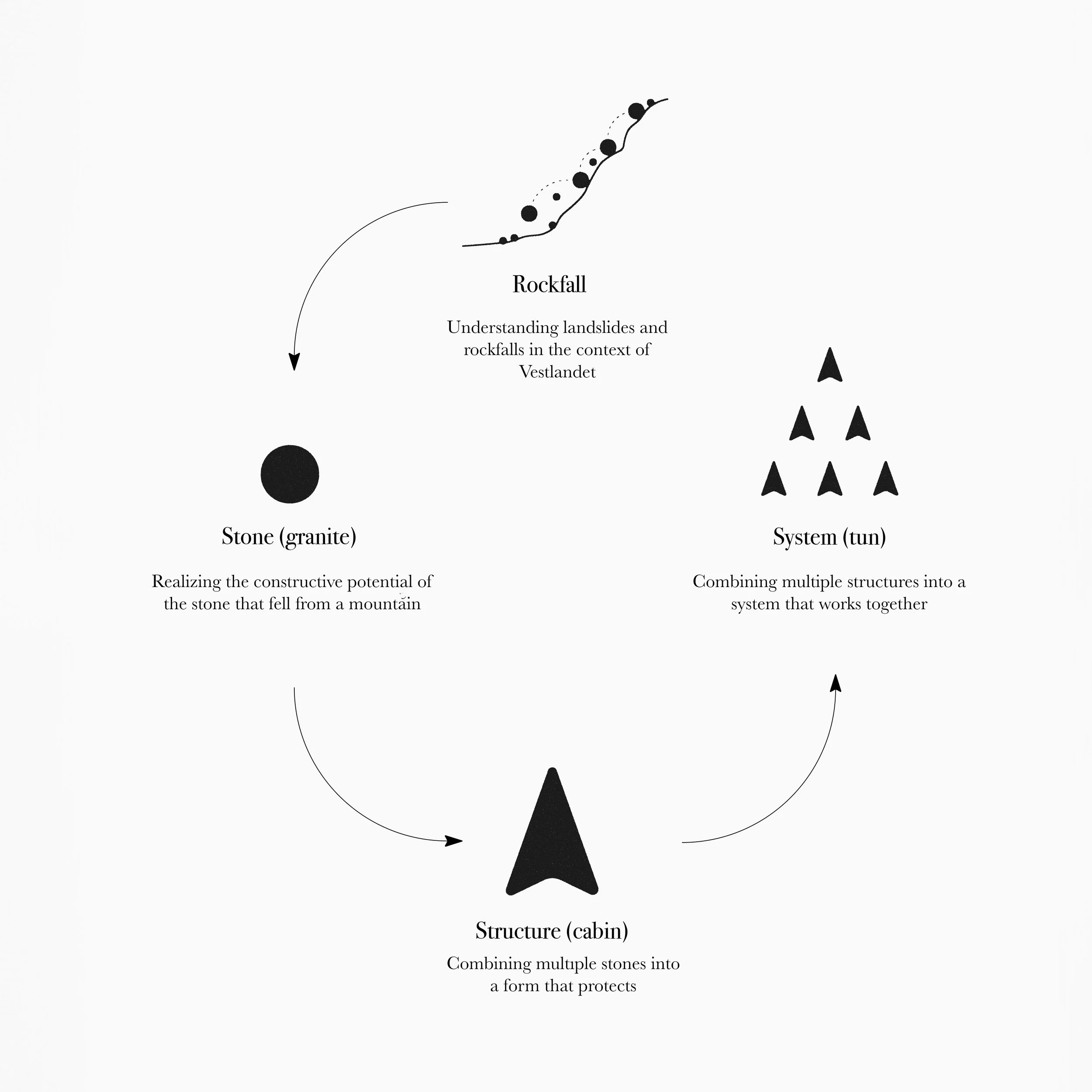
Fra industrielle barrierer til integrert motstandsdyktighet
Tradisjonelle ingeniørløsninger baserer seg vanligvis på tiltak i løsneområdet – som omfattende snøfangernett i stål – noe som ofte er økonomisk uoverkommelig eller visuelt skjemmende. Denne forskningen foreslår i stedet direkte sikring(Direct Protection).
Ved å løfte frem stein som et primært tektonisk materiale, integrerer arkitekturen motstandsdyktigheten direkte i byggets egen masse. I motsetning til stål, som kan svekkes og bli sprøtt over tid, utnytter stein sin egen tetthet og støtindusert fragmentering til å absorbere og spre energi. Ved å ta i bruk fjellets egne materialer slutter arkitekturen å være et midlertidig fremmedelement, og blir i stedet en permanent del av det geologiske landskapet.
Arkitektonisk sikring i fjellandskap
Fjellregioner har en lang tradisjon for sikringskonstruksjoner mot snøskred, steinsprang og skråningsinstabilitet. I Sveits har slike løsninger blitt systematisk integrert i selve bebyggelsesstrukturen. I Norge viser historiske steinkonstruksjoner lokale, pragmatiske løsninger, men formelle arkitektoniske rammeverk for sikring har vært sjeldne. Etter hvert som den klimadrevne ustabiliteten øker, gir disse alpine forbildene verdifull lærdom for hvordan vi kan tilpasse det norske landskapet.
Spaltkeil-tradisjonen
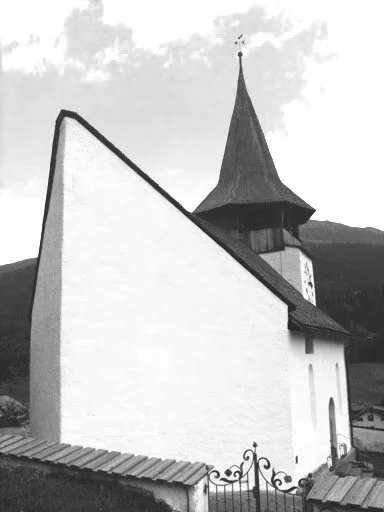
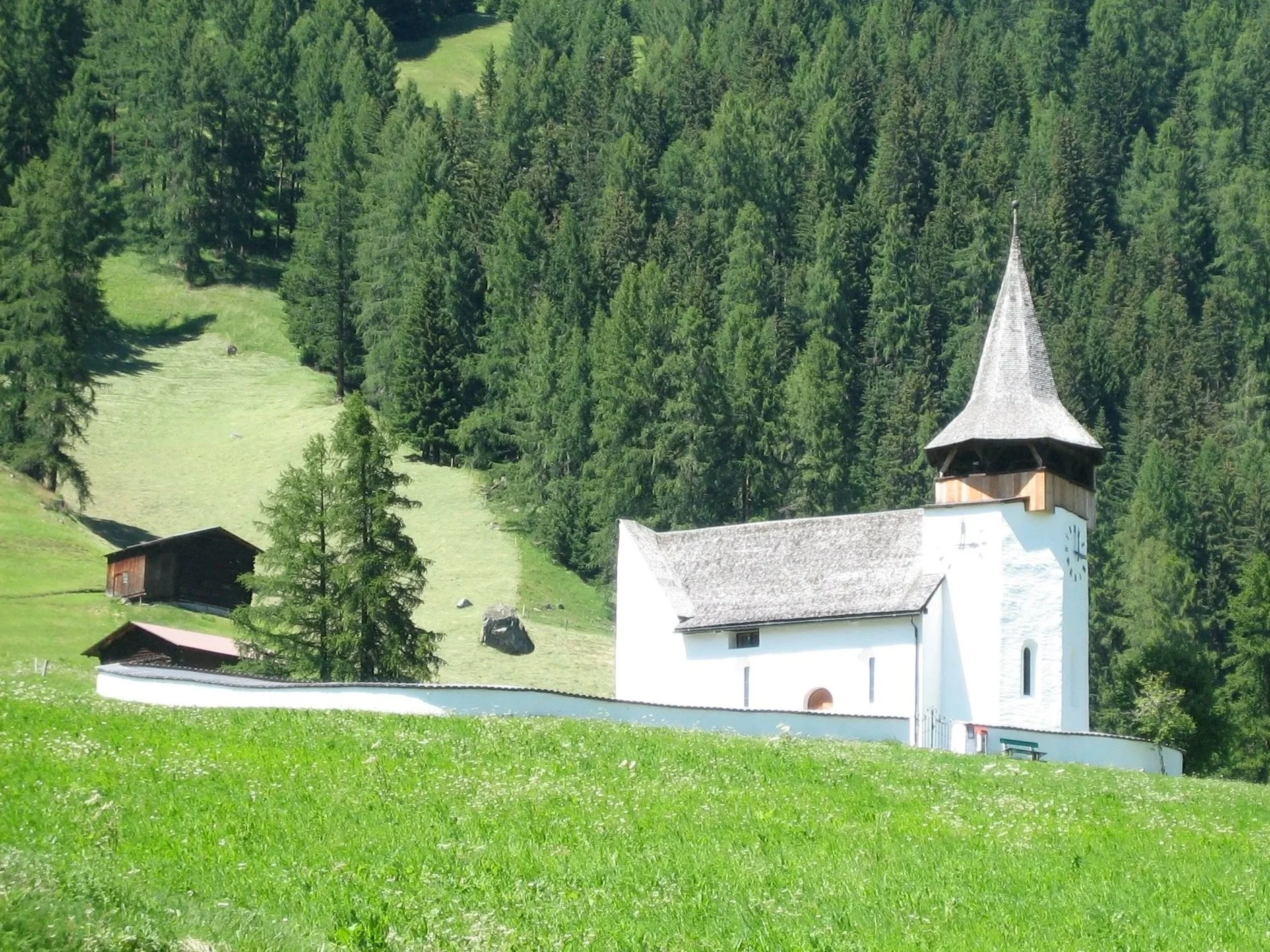
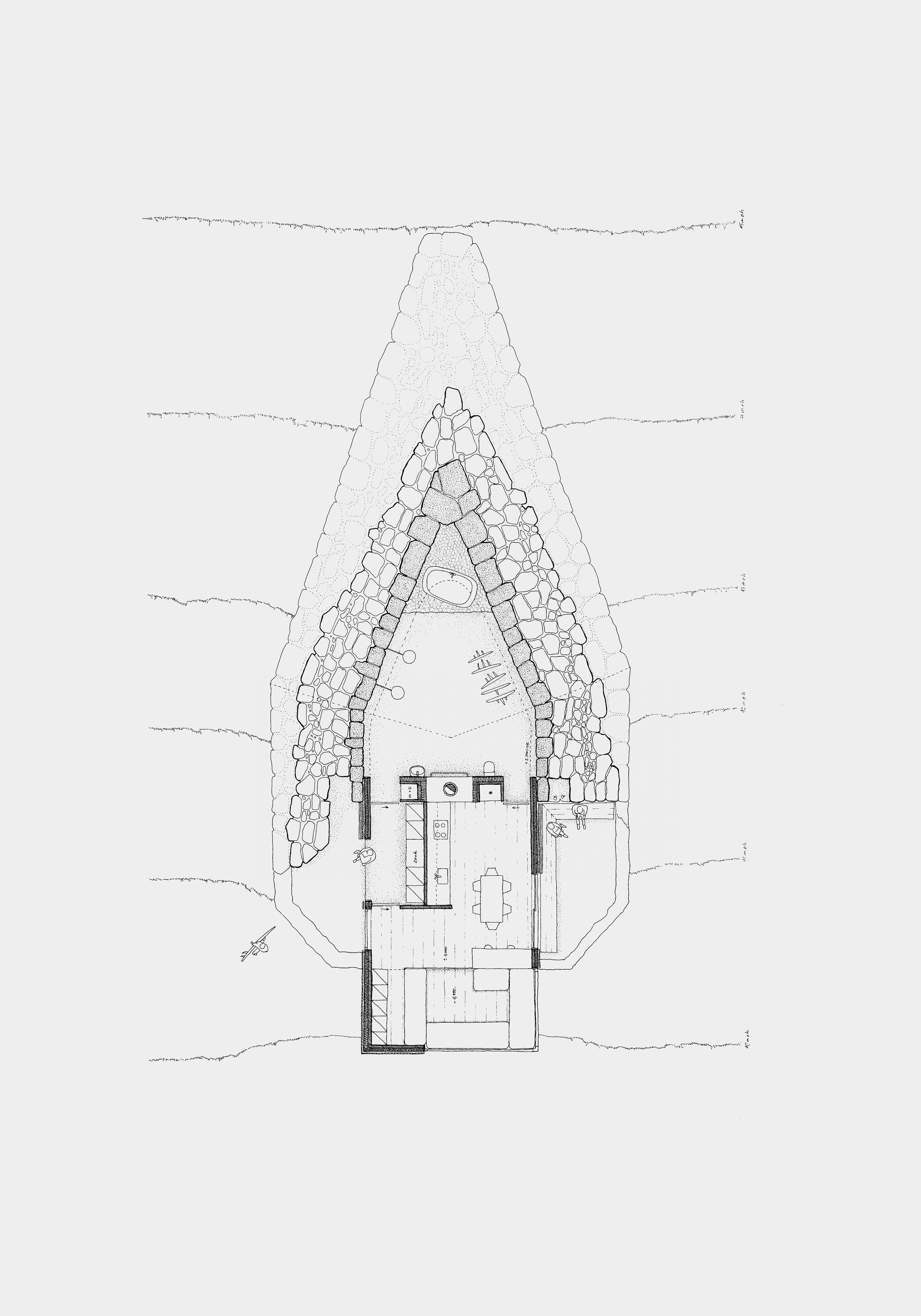
Denne tilnærmingen er forankret i en 400 år gammel alpin kulturarv: Spaltkeil (splittkile). Denne V-formede muren ble utviklet for å dele og lede skredmasser rundt kirker og gårdsbygninger i de sveitsiske alpene helt siden 1600-tallet. Ved å videreutvikle denne typologien vekker forskningen til live en utprøvd, historisk metode for direkte sikring, og tilpasser den til de moderne kravene i det norske landskapet.
Photo 1: "The avalanche wedge" by Xenos is licensed under CC BY-SA 3.0.
Photo 2: "Reformierte Kirche Davos Frauenkirch, 2008" by Adrian Michael is licensed under CC BY-SA 3.0.
Designprinsipper og metodikk
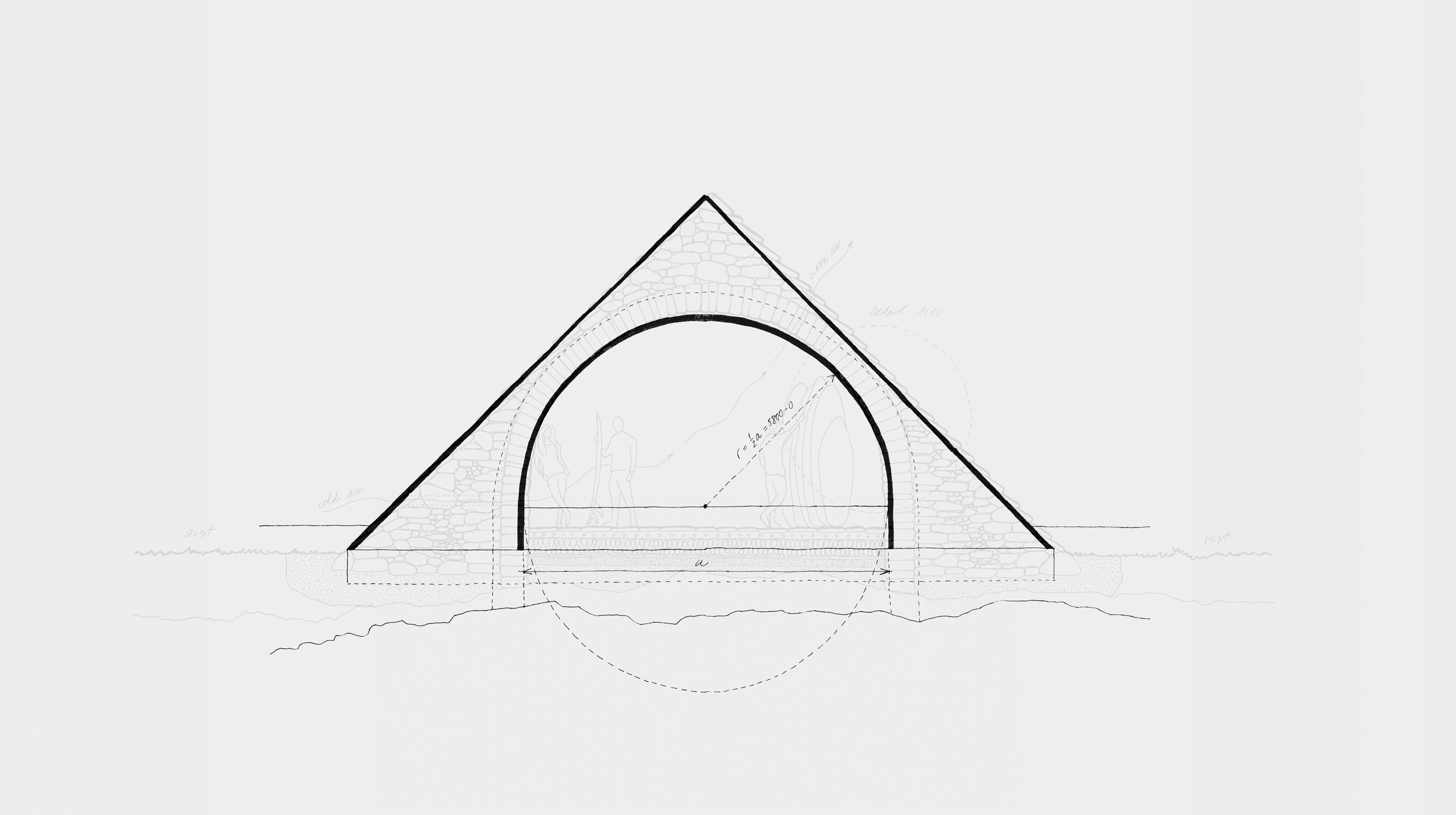
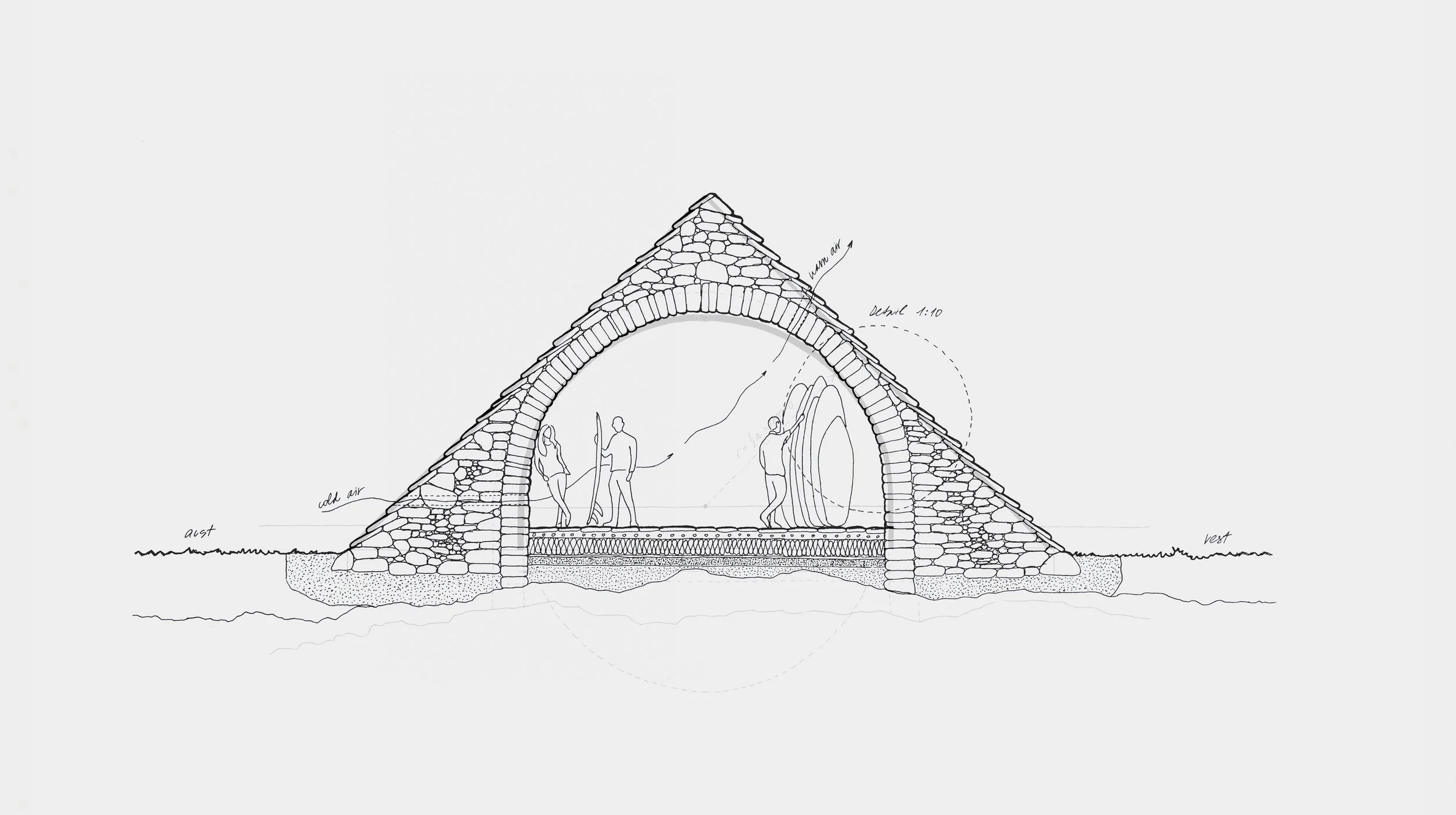
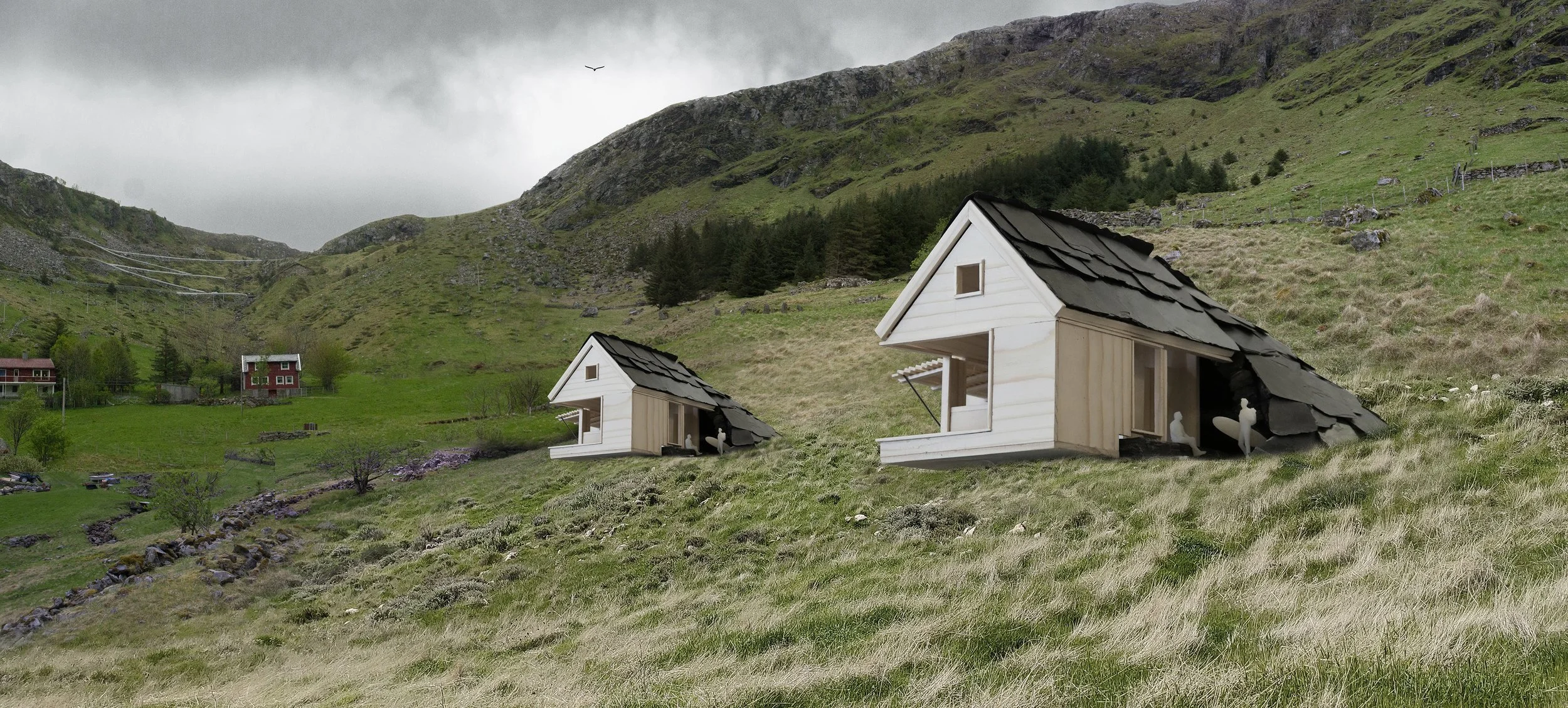
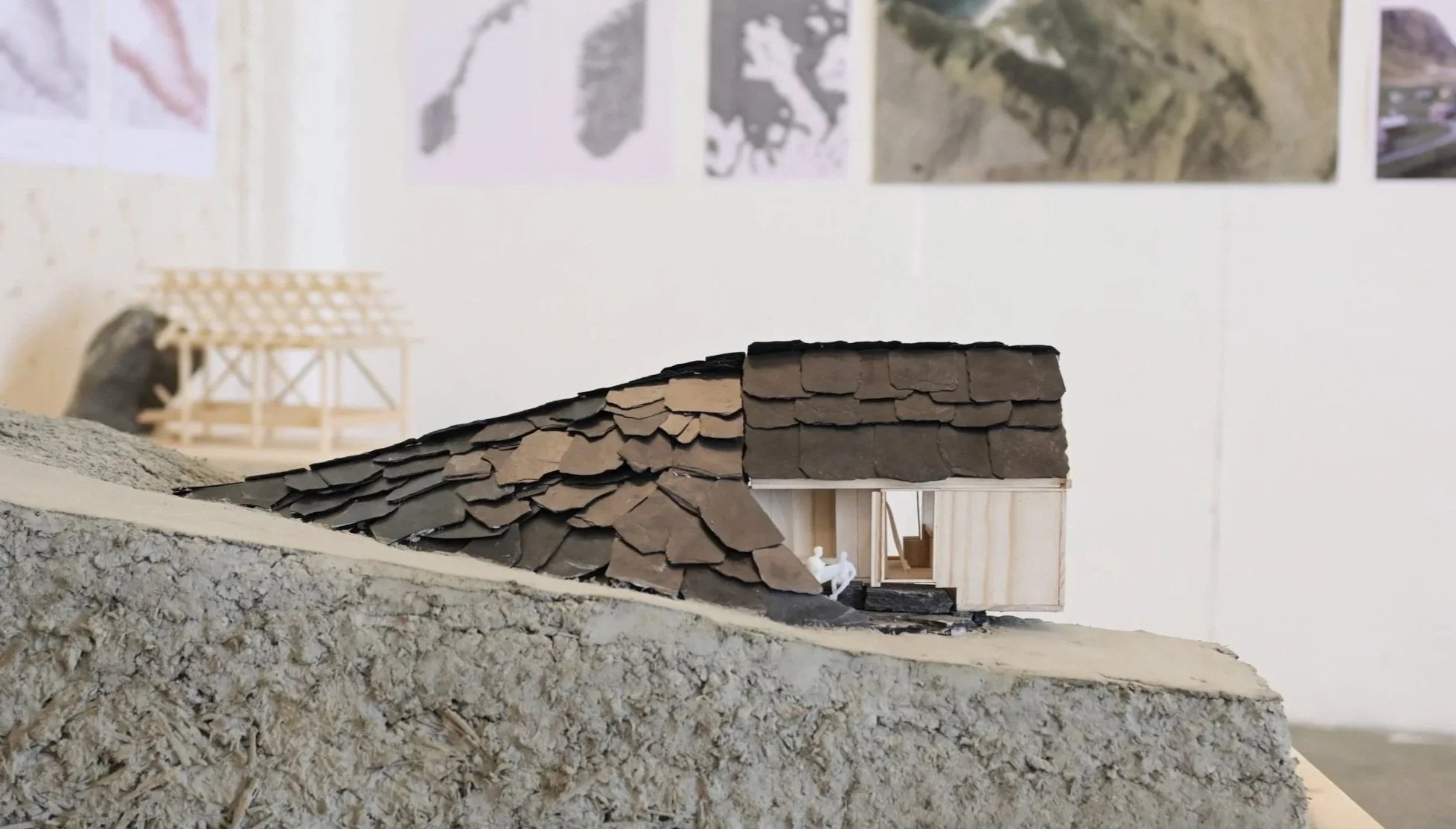
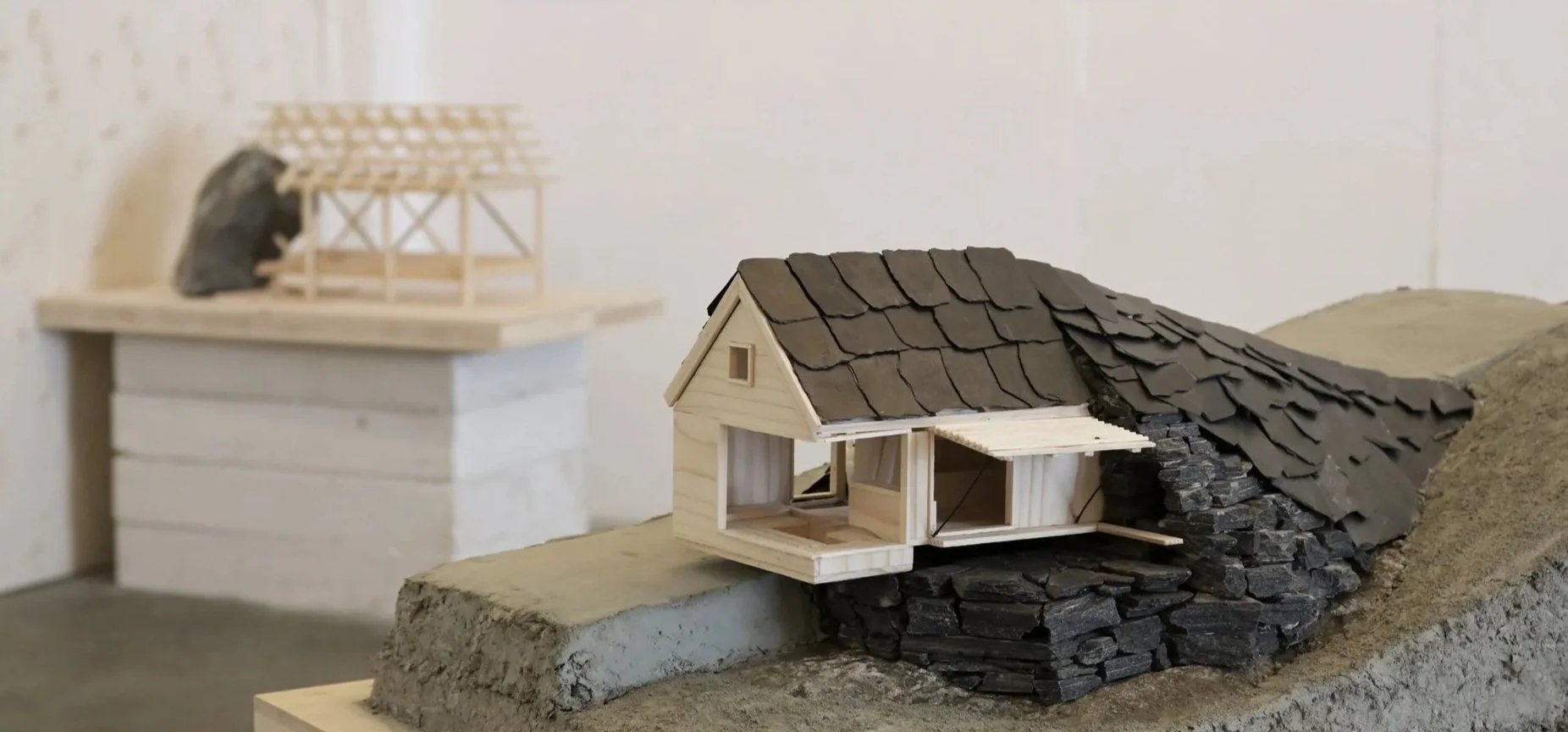
Designstrategien baserer seg på en hybrid tektonisk logikk: en kombinasjon av tunge, beskyttende steinmasser og lettere, beboelige treelementer. Steinen bidrar med den nødvendige strukturelle massen, stabiliteten og holdbarheten som kreves for å motstå ytre krefter, mens treet tilfører fleksibilitet, isolasjon og en menneskelig skala til oppholdsrommene.
Denne tilnærmingen er formet av både regional, historisk murarkitektur og eksperimentelle studier av geometri, materialstivhet og byggbarhet. Detaljerte analyser av slag- og støtkrefter – fra steinsprang til skredmasser i bevegelse – har ledet utviklingen av det beskyttende skallet. Ved å samkjøre den strukturelle formen med naturkreftenes retning og bane, fungerer arkitekturen som et logisk, integrert forsvarssystem i stedet for en frittstående barriere.
Arkitektonisk rammeverk, sikkerhet og regulering
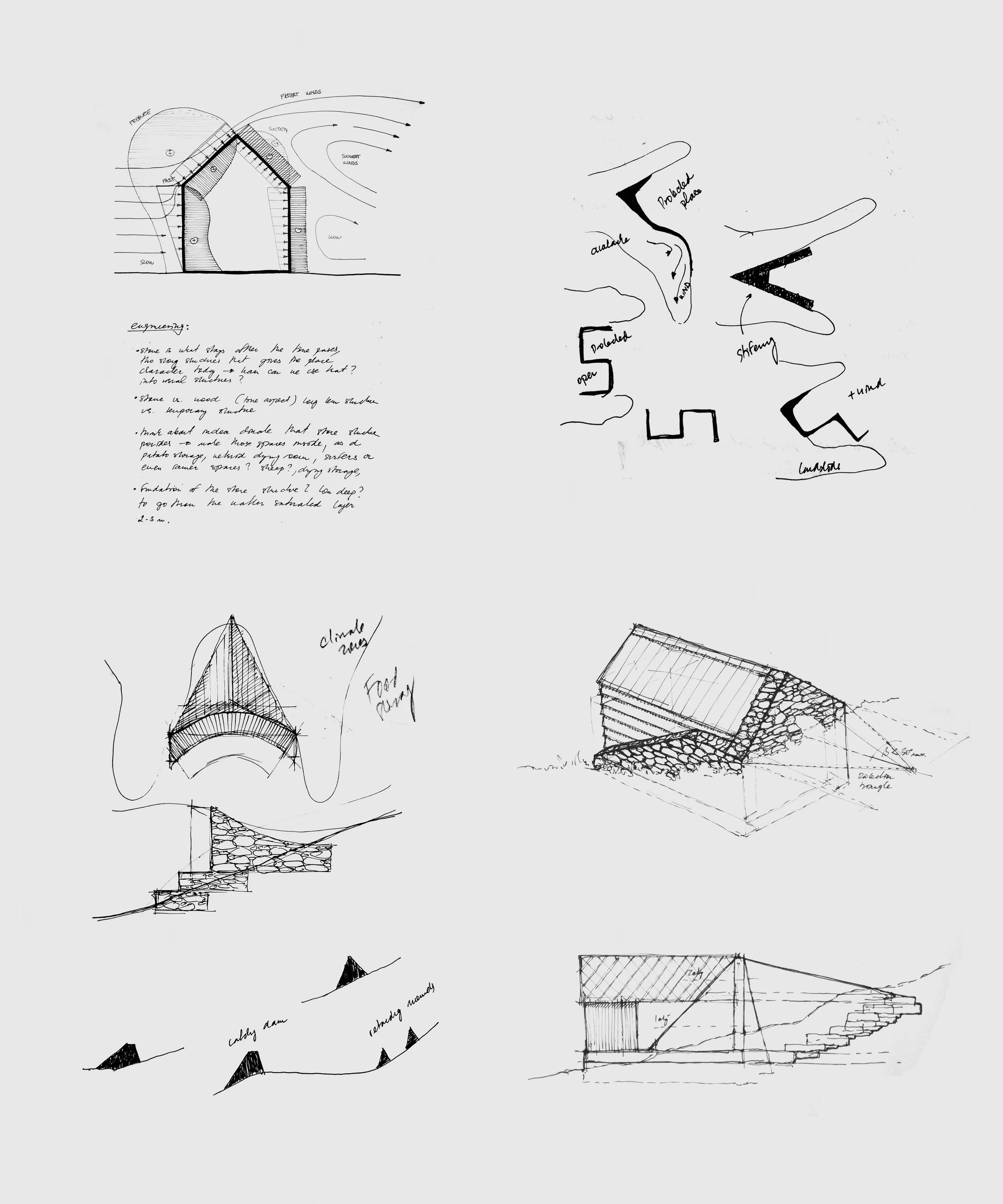
Dette forskningsprosjektet etablerer et helhetlig rammeverk for bygging i skred- og steinsprangutsatte landskap, der sikkerhet, bokvalitet og regelverk behandles som én samlet designutfordring. Metodikken integrerer terrenganalyser og simuleringskartlegging av skredbaner for å bestemme den optimale plasseringen og geometrien til de beskyttende strukturene.
Arkitekturen defineres av et tydelig hierarki: Tunge, beskyttende steinmasser utgjør den primære forsvarslinjen, mens lettere, beboelige treelementer ivaretar den hjemlige komforten og romlige fleksibiliteten. Ved å operere direkte innenfor kartlagte faresoner, adresserer rammeverket sikkerhet – ikke som et løsrevet teknisk krav – men som en romlig og levd kvalitet, definert av masse, beskyttende innhegning og tektonisk klarhet.
Der moderne ingeniørkunst ofte prioriterer tiltak i løsneområdet – som omfattende snøfangernett i stål eller steinspranggjerd – argumenterer dette rammeverket for direkte sikring (Direct Protection). Ved å integrere sikkerhetsbarrieren i byggets egen tektonikk, unngår vi de visuelle og miljømessige «sårene» i landskapet som industrielle barrierer forårsaker. Denne tilnærmingen behandler ikke sikkerhet som et eksternt tillegg, men som selve fundamentet for byggets arkitektoniske karakter og varighet.
Overførbarhet
Selv om forskningen er stedspesifikk, foreslår den arkitektoniske prinsipper som kan tilpasses andre skred-, steinsprang- og snøskredutsatte regioner i Norge og lignende landskap. Dette gjør det mulig for kommuner og formgivere å respondere effektivt på lokale forhold.
Samarbeid og neste fase
Dette forskningsprosjektet etablerer et overførbart arkitektonisk rammeverk for bosetning i skredutsatt terreng. For å flytte dette systemet fra tegnebrettet til en fysisk prototype, søker jeg nå tverrfaglige partnerskap innen ingeniørfag, geologi og lokalforvaltning.
Sentrale områder for videre utvikling:
Strukturell testing: Gå fra teoretiske volumstudier til fysisk testing av støt- og skadelaster.
Regulatorisk innovasjon: Utforske prøveprosjekter eller dispensasjonsstudier innenfor TEK17 for å etablere nye planstandarder for robuste bosetninger.
Prototypeutvikling: Overføre metodikken til et konkret pilotprosjekt i reelle omgivelser på Vestlandet.
Vi søker nå partnere innen ingeniørfag, geologi og lokalforvaltning for å løfte dette rammeverket fra forskning til et konkret pilotprosjekt. Hvis du eller din organisasjon er interessert i å utvikle en prototype, eller vil være med på å utforske nye planstandarder for Vestlandet, ønsker vi å komme i kontakt med dere.